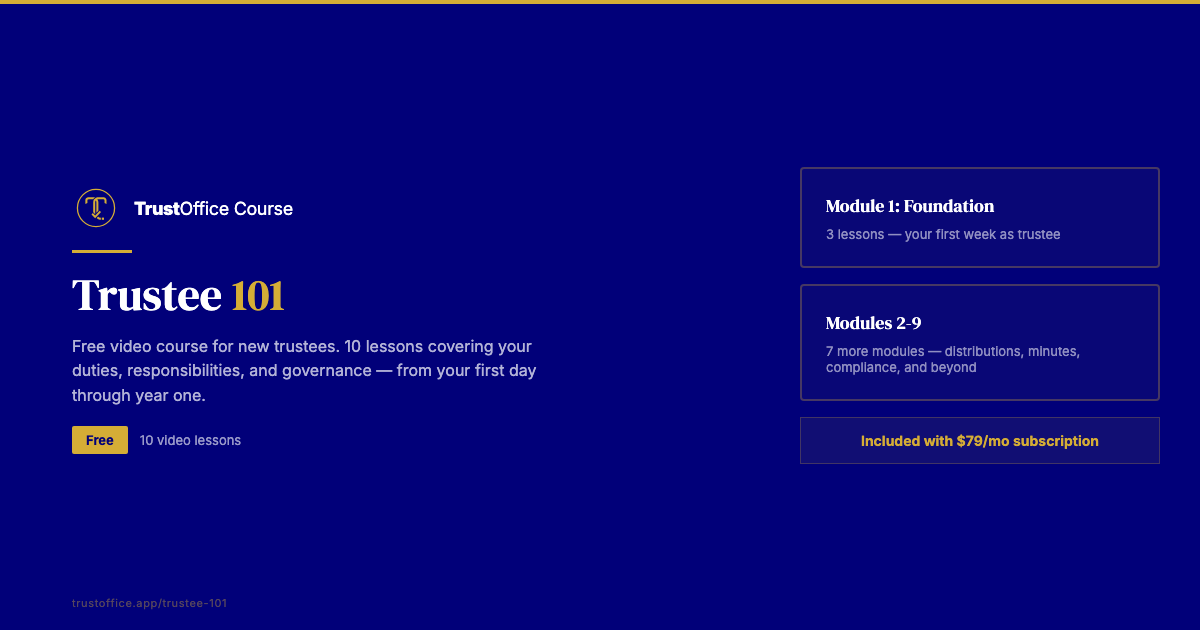
Discover Free Trustee Course for Trust Management Education
Enroll in a Complimentary Fiduciary Course to Enhance Your Abilities Today
Enrolling in a free trustee course can significantly improve one's career competencies. It delivers crucial information on fiduciary duties and financial management. Students can study at their own speed while networking with industry professionals. This chance not only enriches understanding but also creates pathways to career advancement. However, many may question what particular competencies they can expect to acquire and how these can be utilized in practical situations.

Key Competencies You'll Acquire From a Free Trustee Course
A complimentary trustee program provides participants with essential skills vital for effective governance and management. The curriculum typically covers key topics such as financial education, allowing trustees to understand budgets, financial statements, and investment strategies. Participants also acquire understanding into regulatory obligations, ensuring compliance with regulations and moral principles.
Additionally, the course boosts strategic development competencies, arming participants to contribute in long-range institutional targets. Effective communication competencies are one more vital feature, allowing trustees to express thoughts in a clear manner and connect with key parties in an effective way.
Moreover, teamwork and leadership competencies are highlighted, fostering collaboration among board members and advancing a productive deliberation process. Conflict resolution methods are also covered, readying participants to navigate disagreements professionally.
Ultimately, these capabilities not only equip people for their roles as trustees but also enhance their overall administrative abilities, making them precious resources to any organization.
Primary Advantages to Enroll in a Free Trustee Class for Professional Growth
While numerous experts look for methods to enhance their professional paths, taking a complimentary trustee course provides unique advantages that can significantly enhance one's trajectory. Initially, these courses provide crucial information about fiduciary responsibilities, strengthening a professional's credibility in their field. Comprehending the legal and ethical obligations of a trustee can create new career opportunities and responsibilities.
Moreover, engaging with industry professionals and colleagues during these courses can result in beneficial relationships that may facilitate career progression. Participants also gain hands-on expertise in financial management and governance, which are increasingly sought after in various industries. Finally, the flexibility of digital learning enables individuals to study at their own pace, making it easier to manage education with current work responsibilities. Overall, signing up for a free trustee course not only expands knowledge but can also significantly improve professional opportunities and career development.
Uncovering the Superior Unpaid Trustee Training for You
How might one locate the most appropriate complimentary trustee program from the wide variety obtainable? First, individuals must assess their exact objectives and career goals, identifying what competencies or learning gaps they seek to fill. Next, studying copyright and framework is essential; a well-defined copyright can reveal whether the course will fulfill personal goals.
Furthermore, copyrightining the qualifications of the teachers can provide understanding into the standard of instruction provided. Reviews and testimonials from past participants are priceless, as they demonstrate real experiences and outcomes.
Finally, assessing the pliability of the course format—whether it is independently paced or set—can assist in choosing a course that accommodates one's personal schedule. By weighing these considerations, students can create a more informed decision, ensuring the picked program corresponds with their career ambitions and educational needs.
Smart Steps for Making the Most from Your Trustee Course
Getting the most benefit from a trustee course requires find guide a strategic approach. Participants should start by setting clear goals and identifying distinct skills or knowledge they intend to acquire. Being actively involved in the learning process is essential; this means taking part in discussions, asking questions, and collaborating with peers. Frequently reviewing the course materials helps solidify understanding and memory of main concepts.
Moreover, it is beneficial to document information and create summaries of key subjects, facilitating easier review later. Networking with peer attendees can provide valuable insights and assistance, cultivating a community atmosphere. Leveraging additional materials, such as recommended readings or web-based discussions, can improve understanding and implementation of learned skills.
In conclusion, applying the knowledge in practical scenarios, whether through simulations or real-life situations, consolidates learning and increases confidence in trustee obligations. By implementing these strategies, individuals can fully take advantage of their trustee course experience for personal and professional growth.
Everyday Applications of Fiduciary Competencies in Governance
Trustee abilities are vital in effective governance, allowing individuals to navigate complex organizational landscapes. These abilities are essential for promoting transparency, accountability, and ethical decision-making within different organizations, including nonprofits, educational institutions, and corporate boards. Trustees outfitted with strong analytical abilities can evaluate organizational performance, fiscal well-being, and compliance with regulations, thereby enhancing comprehensive organizational leadership.
Moreover, strong communication competencies allow trustees to engage with stakeholders, ensuring that multiple viewpoints are incorporated in decision-making processes. Conflict resolution competencies are just as vital, as they support maintain harmony and collaboration among board members and other stakeholders. Additionally, forward-thinking planning abilities allow trustees to synchronize organizational goals with broader missions, ensuring endurance and growth. In this way, the application of trustee skills in governance strengthens institutional frameworks but also fosters trust and integrity within communities and organizations.
Popular Inquiries That Are Posed Often
Will Trade Bodies Endorse Free Trustee Courses?
Free trustee courses may not always be recognized by trade associations. Accreditation generally relies on the course provider and the designated accrediting entity, so candidates should validate certifications before signing up for any program.
How Much Time Will a Standard Free Trustee Course Require to Conclude?
A common free trustee class usually takes between four to eight weeks to conclude. Course timeframe may change depending on the provider, content depth, and participant participation, enabling versatility in learning schedules.
Is it Feasible to Acquire a Certificate Upon Finishing a Free Trustee Course?
Yes, attendees can generally receive a certificate after finishing a free fiduciary program. However, certification availability may vary by provider, so participants should verify the specific details with the course organization before registering.
Is There a Cap to How Many Trustee Courses I Can Enroll In?
There is generally no limit to the number of trustee courses one can take part in. Individuals are motivated to pursue multiple courses to broaden their expertise in trustee duties and management.
What Conditions Are Necessary for Participating in a Free Trustee Course?
To copyright for a complimentary trustee program, individuals typically need a fundamental knowledge of financial principles, dedication to the course duration, and sometimes prior experience in trustee positions. Particular prerequisites may differ by institution.